The Outdoor Amphitheater Outfit: 88°F at Doors, 62°F at Encore

Quick Answer: Dress for the encore, not for doors. Build around a breathable base plus one packable layer you can tie at your waist for four hours, and choose bottoms that handle sitting on a lawn. The single most common mistake is bringing nothing warm because it was 88°F when you left the house.
Doors at 6:30 in full late-August sun. Main set ends at 11 with a breeze off the lawn and everyone in tank tops looking miserable.
A 25-degree swing across one evening is standard for outdoor amphitheaters in late summer, and one outfit has to carry all of it.
How much does the temperature actually drop?
More than people plan for. A clear late-August evening commonly drops 20 to 30°F between 6 p.m. and 11 p.m., and outdoor venues make it feel like more for three specific reasons.
You stop moving. Standing or sitting for four hours generates far less body heat than walking in from the parking lot did.
Amphitheaters are usually in open or elevated spots — hillsides, fields, waterfronts — that catch wind and lose heat faster than a city street. The lawn is markedly cooler than the covered seats.
You are probably slightly damp, from the heat earlier or from a crowded set, and evaporating sweat in a breeze cools you fast.
The useful reframe: the evening has two completely different climates and you will spend more time in the cold one. Doors to sunset is maybe 90 minutes of heat. Sunset to encore is three hours of steadily dropping temperature.
Dress for the three hours.
What is the actual outfit formula?
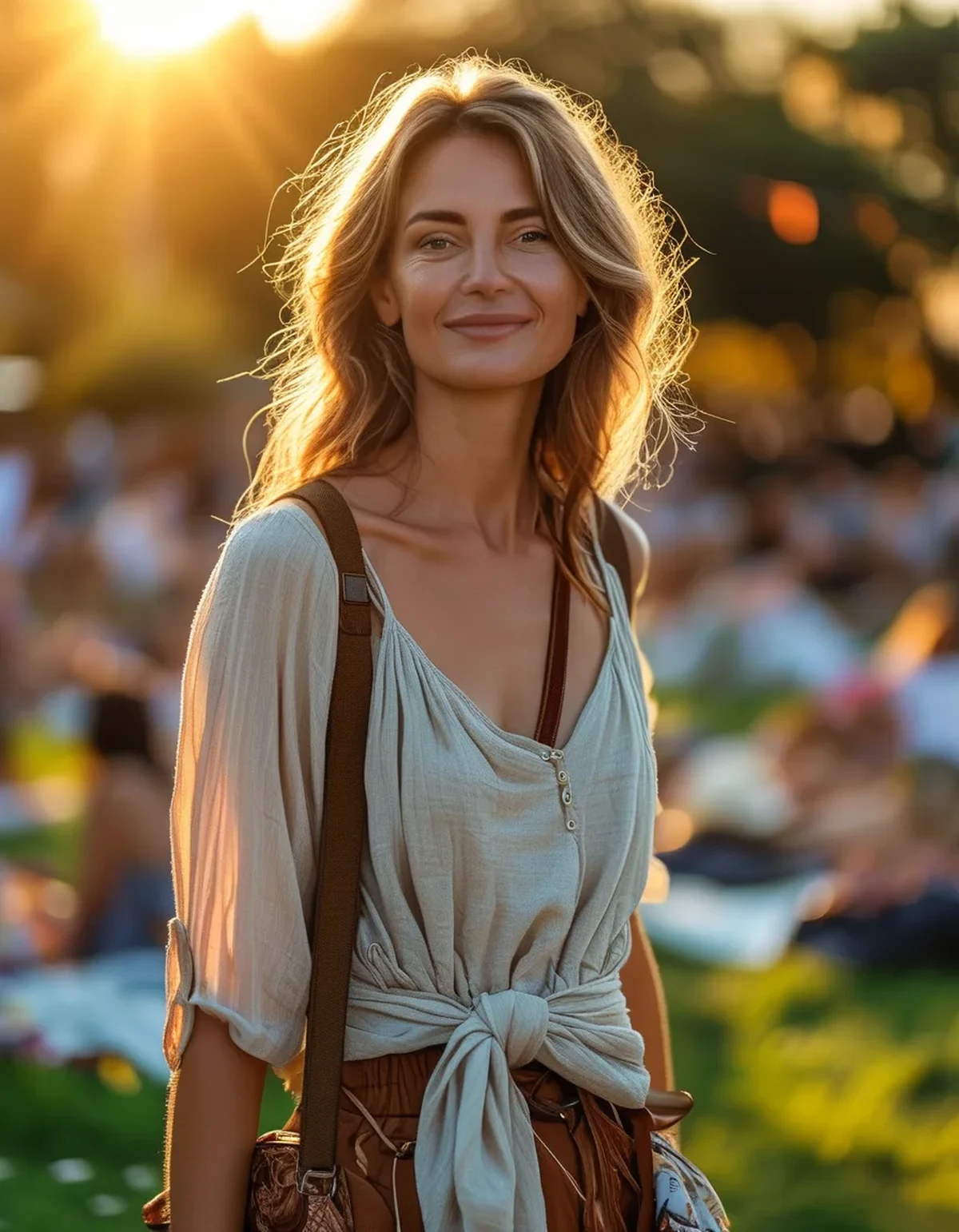
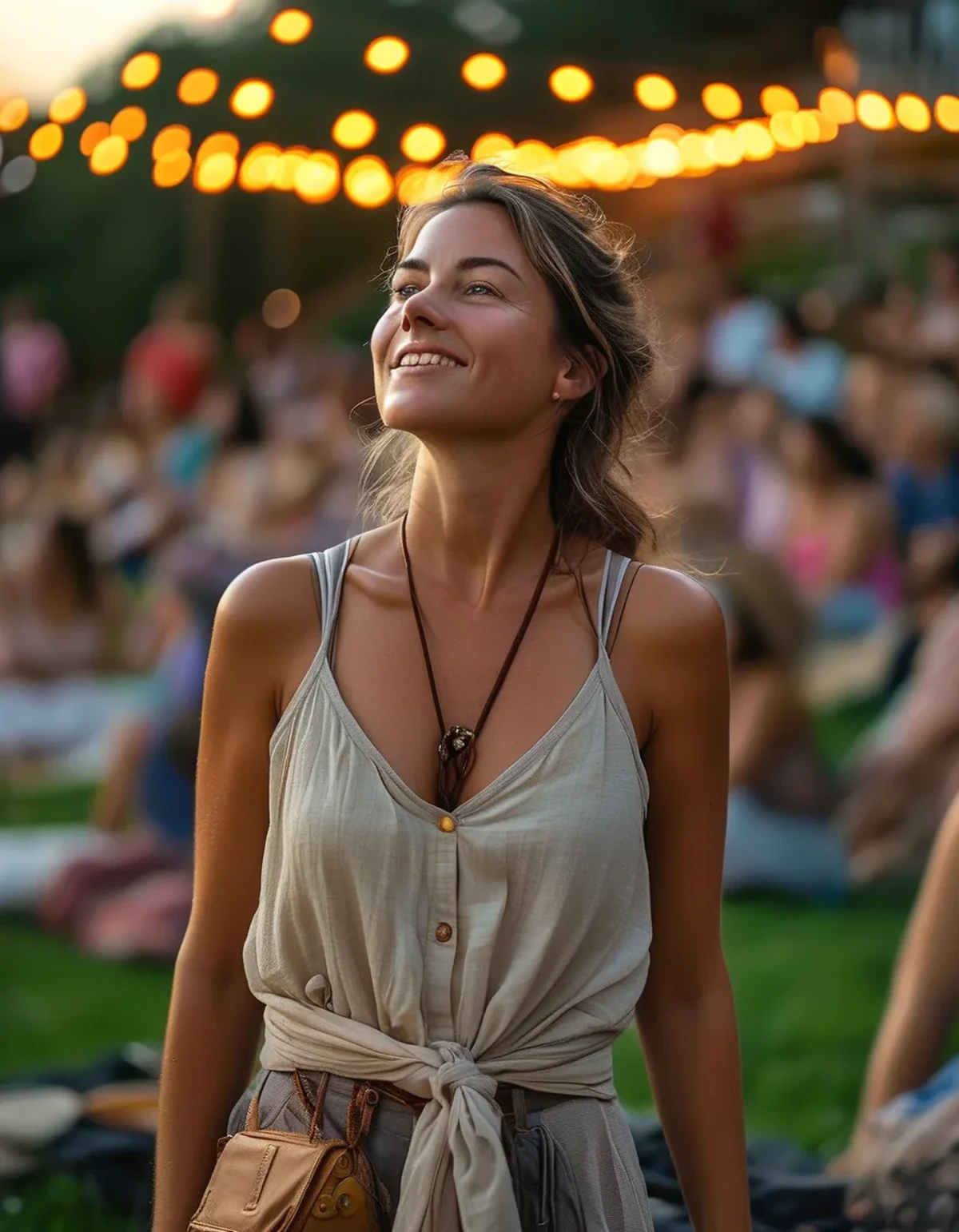
Base — breathable, works alone at 88°F. A cotton or linen-blend tank, a jersey tee, or a light knit. It has to look complete on its own because it will be alone for the first 90 minutes.
Bottoms — lawn-compatible. Denim shorts, a cotton skirt with something underneath, or lightweight wide-leg trousers. The test is whether you would sit on grass in them. Light colors show grass stains; mid-tones do not.
The layer — packable, tiable, warm enough. This is the piece the whole outfit depends on. It needs to compress small enough to tie around your waist for four hours, and be warm enough to matter at 62°F in a breeze. A light flannel, a cotton overshirt, or a thin fleece all work. A denim jacket is warm but too bulky to tie comfortably.
Shoes — closed toe, worn in. Sneakers or flat boots. Lawns are uneven, dark, and full of people, and open toes in a standing crowd is how the night ends badly.
Bag — small crossbody, and check the venue’s clear-bag policy before you leave. Many amphitheaters have size limits and some require clear bags, which is a genuinely bad thing to discover in the entry line.
What Nobody Tells You About Lawn Seats
The lawn is 5 to 10 degrees colder than the seats. Open, elevated, exposed, and grass loses heat fast after dark. If you have lawn tickets, size your layer up accordingly.
Dew starts before the show ends. By 10 p.m. on a clear night, grass is often genuinely damp. A blanket is standard, and a light waterproof-backed one is far better than a cotton throw that soaks through.
A blanket that doubles as a wrap solves the whole layer question, if the venue allows one. Check the policy — some permit blankets, some do not, and sizes are sometimes restricted.
Sunset is directly in your eyes at a lot of venues. Amphitheaters are frequently oriented west, so the first opener happens in full glare. Sunglasses are practical rather than a style choice, and you will want somewhere to put them at 9 p.m.
The walk back to the car is the coldest part of the night, and it is often long, dark, and slow. Whatever you brought needs to still be with you at midnight — which is the argument for a layer you can tie rather than one you might set down.
How do you handle the heat at the start?
The first 90 minutes are the part people underdress for in the opposite direction — full sun, no shade, standing in a line.
Bring the layer, do not wear it. Tied at the waist from the moment you leave the car. Wearing it in and taking it off means carrying it loose, and loose things get set down and lost.
A hat and sunglasses for the entry line. Amphitheater entry lines are frequently unshaded and can run 30 to 45 minutes at a big show. This is where people get burned, and evening sun still burns.
Sunscreen before you leave, especially shoulders and the back of the neck. Reapplying in a crowd is unrealistic.
Water before and during. Many venues allow one sealed bottle or an empty reusable one with refill stations. Alcohol plus heat plus standing for four hours is the standard recipe for feeling awful by the headliner, and hydration is most of the fix.
One small thing that pays off: a hair tie on your wrist. It is 88°F, you are in a crowd, and getting your hair off your neck is the fastest available cooling.
FAQ: Outdoor Concert Outfit Questions, Answered
What if it rains?
Outdoor shows generally go on unless there is lightning. A packable rain shell in your bag weighs almost nothing and is the difference between staying and leaving. Umbrellas are prohibited at most amphitheaters, so do not plan around one.
Are shorts or a skirt better for a lawn show?
Shorts, on balance — easier to sit on grass in, easier in a crowd, and no wind issues. If you want a skirt, wear shorts underneath and choose a length that will not need managing every time you sit down.
Can I bring a blanket or a chair?
Blankets are usually allowed with size limits; chairs are restricted at most venues, sometimes to low-back lawn chairs only, sometimes not at all. Check the specific venue’s page the day before — the policies vary far more than people expect and they change season to season.
TL;DR: Dress for the encore, because that is where you will spend most of the night.
- Expect a 20 to 30°F drop between doors and the last song, and the lawn runs another 5 to 10 degrees colder than the seats.
- Base layer must work alone at 88°F; the packable layer must tie at your waist for four hours and still be warm at 62°F.
- Lawn-compatible bottoms in a mid-tone, and closed-toe worn-in shoes, always.
- Bring the layer tied on, do not wear it in — loose items get lost.
- Hat, sunglasses, and sunscreen for the entry line, which is the sunburn risk nobody plans for.
- Check the bag and blanket policy before you leave the house.
The walk back to the car at midnight is the coldest part of the night. Pack for that and everything before it is easy.
Keep Reading
This article is for general informational and styling purposes only. Fit, sizing, and product availability may vary.