Seated Show vs General Admission Floor: What Actually Changes
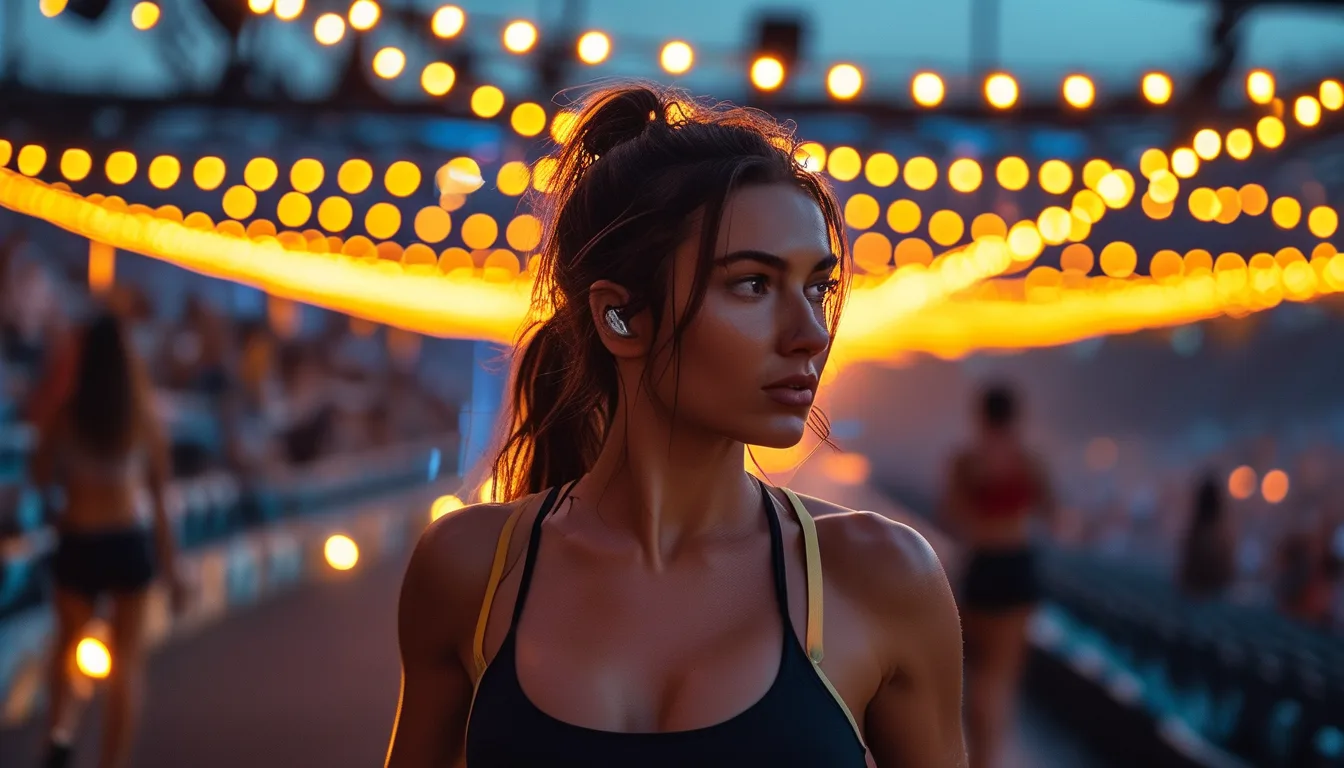
Quick Answer: A seated show is a temperature problem - you are still for two hours in air conditioning, so you need a layer you can add. A floor show is a heat and movement problem - you are standing, packed, and generating warmth, so you need a layer you can remove and carry. The single biggest swap is footwear: cushioning matters on the floor, and structure matters when seated because your feet swell.
Most people dress for the artist and then discover that the ticket type was the variable that mattered.
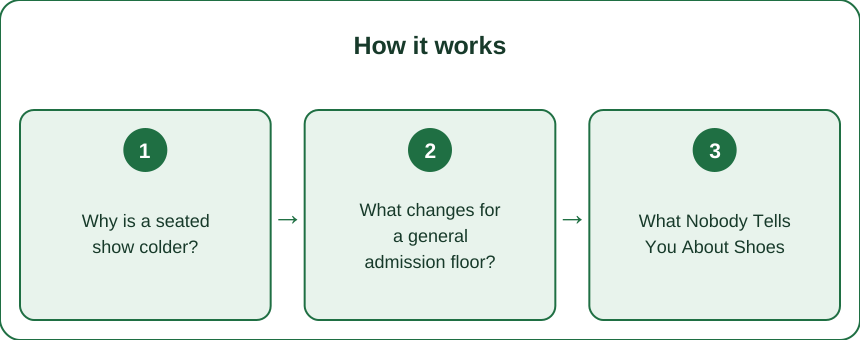
Why is a seated show colder?
Because venue air conditioning is calibrated for a full room of people generating heat, and when you are seated and still, you are not generating much.
Metabolic heat production drops substantially when you go from standing and moving to sitting still. Meanwhile the HVAC keeps running at the same rate. Two hours into a seated show, most people are noticeably cold - particularly in arms, shoulders, and feet.
There is a second factor: seated venues run cooler on purpose because the room fills quickly and the system has to handle the peak load.
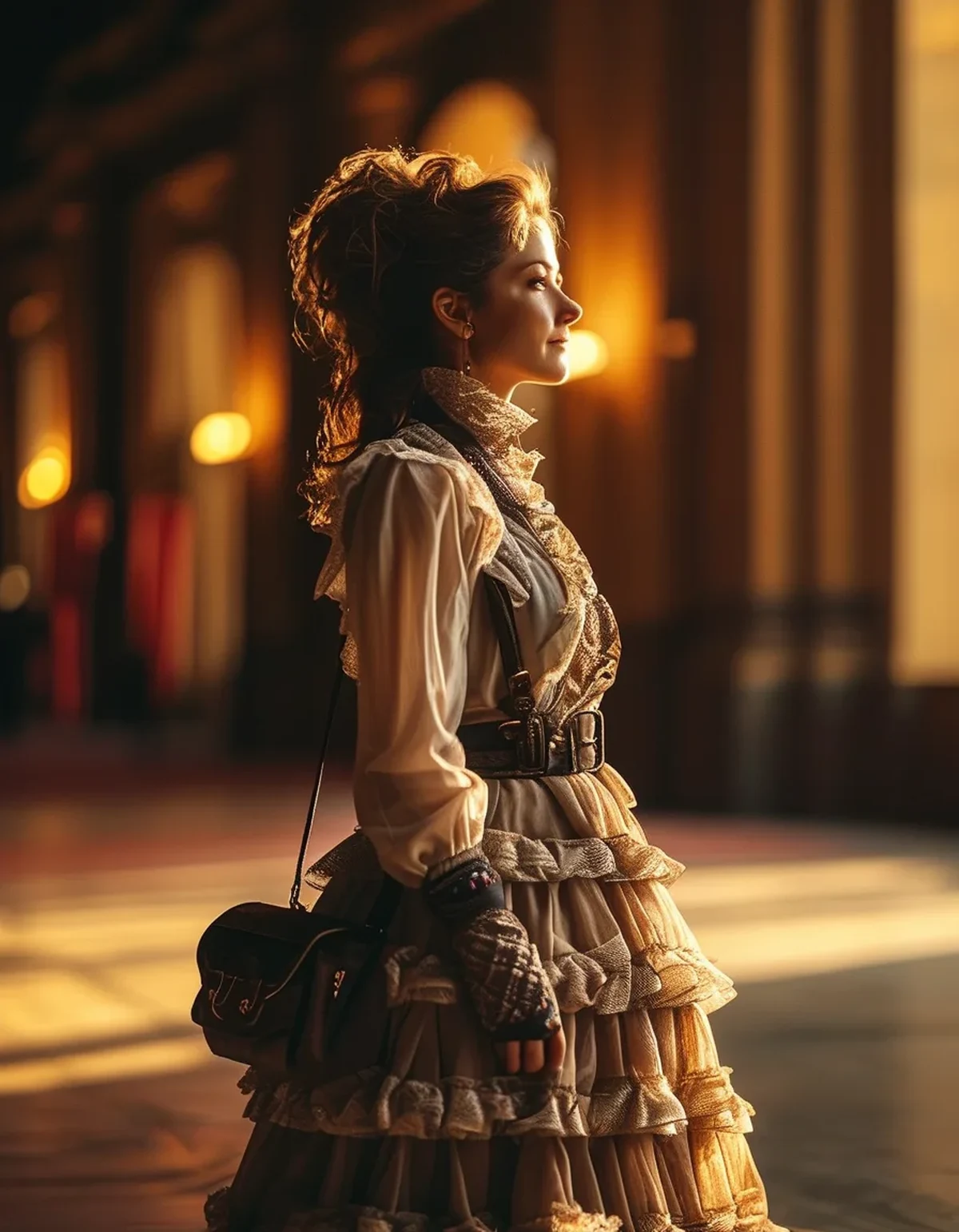
So the seated outfit needs an addable layer. A cardigan, a light jacket, or a large scarf that packs into a bag. And the layer has to be something you can wear over your seat back without losing it, which in practice means something you can put on rather than something you drape.
What changes for a general admission floor?
Everything about the heat equation reverses.
On a packed floor you have body heat from all directions, no airflow, and you are standing for potentially four hours including openers. Floor temperatures at a busy show can run 10 to 15 degrees above the rest of the venue.
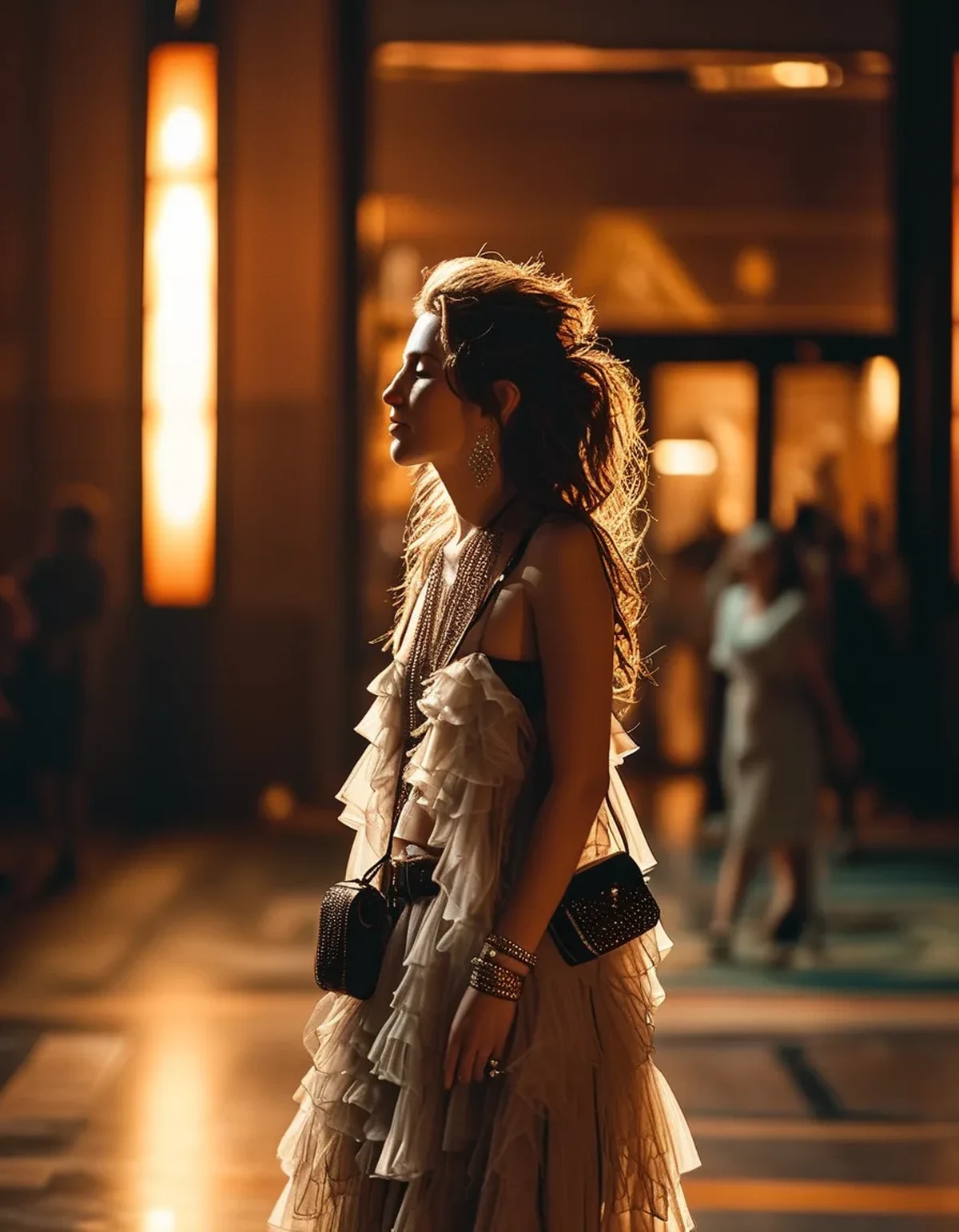
That means the layer has to come off and then has to go somewhere. Tying a jacket around your waist works until the crowd compresses. A small crossbody bag that a thin layer packs into is the actual solution - and check the venue’s bag policy, since clear-bag and size restrictions are common.
The other floor-specific problem is that you cannot leave and come back easily. Whatever you brought, you have for the night. So: a hair tie on your wrist, a small water bottle if permitted, and nothing you would be upset to lose.
What Nobody Tells You About Shoes
The shoe logic is genuinely counterintuitive, and it is the thing most people get backwards.
On the floor, you need cushioning - stack height, a real midsole, something that handles four hours of standing on concrete. Standing still on a hard surface is harder on your feet than walking, because no muscle pump is working and blood pools.
Seated, you need structure more than cushioning, because your feet swell in a warm venue while sitting still. A shoe that fits perfectly at 7 p.m. can feel tight by 10. Something with a little give, or a shoe you can loosen, matters more than the midsole.
In both cases, avoid brand new shoes and avoid anything backless. And for the floor specifically: closed toe, non-negotiable. Crowded floors mean feet get stepped on, and that is a genuinely unpleasant way to spend an evening.
One more floor note: a slight platform gives you visibility in a crowd, which is a real benefit. Just not so much that stability suffers when people move.
How does an outdoor show change things?
This is the version most relevant right now, with amphitheater season running through September.
The temperature swing at an outdoor evening show in late summer is large - often 20 to 25 degrees between doors opening at 6 and the encore at 11. The afternoon can be 85F and the drive home 60F.
The formula that handles it: a breathable base you are comfortable in at the hottest point, plus one packable layer for after sunset, plus something for your legs. Bare legs at 60F in a breeze after four hours of standing is the specific mistake people make in August.
Lawn seating adds another variable - the ground gets damp with dew after dark. A thin blanket doubles as a layer and a seat.
And for outdoor venues with grass or gravel, the shoe answer shifts toward a sneaker with tread. Amphitheater lawns are sloped and get slippery once the dew settles.
What is the actual packing list?
Seated show: an addable layer that fits over your shoulders while seated, structured shoes with a little room, a small bag that fits under the seat, and a scarf if the venue is one you know runs cold.
GA floor: a cushioned closed-toe shoe, a thin removable layer that packs small, a crossbody bag within the venue’s size policy, a hair tie, earplugs, and a phone charged past 60 percent because you will not be reaching a charger.
Outdoor evening: all of the GA list plus a packable warm layer and something covering your legs after dark. A thin blanket if there is lawn seating.
The two things worth adding regardless of ticket type: earplugs - decent musician-grade ones preserve sound quality and protect hearing, and hearing damage from loud shows is cumulative and permanent - and a small pouch you can find in the dark.
Check the venue’s bag policy the day before. It is the single most common thing that goes wrong at the door and it is entirely avoidable.
FAQ: Concert Outfit Questions, Answered
Should I wear jeans or leggings to a floor show?
Leggings or something with stretch, generally - four hours of standing in stiff denim is uncomfortable, and heat on a packed floor makes heavy fabric worse. Jeans are fine for seated shows.
How early should I arrive for a good floor spot?
Depends entirely on the artist, but any spot worth arriving early for means more standing time. Factor that into the shoe decision - two extra hours in line is two extra hours on concrete.
Are earplugs really necessary?
Sustained levels at live shows commonly exceed the thresholds where hearing damage accumulates. Filtered earplugs reduce volume fairly evenly across frequencies, so the music still sounds right. They are inexpensive and the damage they prevent is permanent.
TL;DR:
- Seated shows are a cold problem: you need a layer you can put on, and shoes with room for swelling feet.
- Floor shows are a heat problem: you need a layer that comes off and packs into a bag you can carry all night.
- Cushioning matters on the floor, structure matters when seated. Closed toe either way.
- Outdoor evening shows in late summer swing 20 to 25 degrees - bring a packable layer and cover your legs.
- Check the venue bag policy the day before. Bring earplugs regardless.
Amphitheater season has a few weeks left. The 85-degree doors and 60-degree encore is the specific problem to dress for right now.
See It in Motion
Seen here: High Waist 8” Yoga Shorts — shop similar styles on bubblelime.com
Keep Reading
This article is for general informational and styling purposes only. Fit, sizing, and product availability may vary.