What to Wear to an Outdoor Show When It Is Hot at 7pm and Cold at 11pm

Quick Answer: Dress for the temperature at 11pm and carry the difference. Outdoor venues drop sharply after sunset - often 15 to 20 degrees Fahrenheit between doors and encore - and there is nowhere to store a coat. Build the outfit around a summer base, one packable layer that ties around your waist, and closed shoes you can stand in for four hours.
You will be standing on grass in the dark for two hours longer than you planned.
Why does an outdoor show get so much colder than you expect?
Several things compound after sunset, and none of them are captured by the daytime forecast.
Radiative cooling. Open ground with a clear sky loses heat rapidly after sunset, which is why an open field or an amphitheatre gets much colder than a city street with buildings retaining heat. The drop is larger in exactly the settings outdoor shows happen in.
You stop generating heat. Standing still for three hours produces far less heat than walking to the venue did. The temperature you judged on arrival was measured by a body that was moving.
Damp ground and dew. Late-summer nights produce dew, which makes grass wet and cold from around mid-evening. Cold feet accelerate everything else.
Wind picks up in open venues with nothing to break it.
And late August has an unusually large day-to-night swing in many regions, because daytime temperatures are still high while nights have started cooling properly. A 20-degree Fahrenheit drop between 7pm and 11pm is common and it feels like more when you have been still.
The correct planning temperature is the overnight low, not the daily high - and most people check the wrong number.
What is the actual outfit structure?
Three parts, and the important constraint is that everything must be carryable.
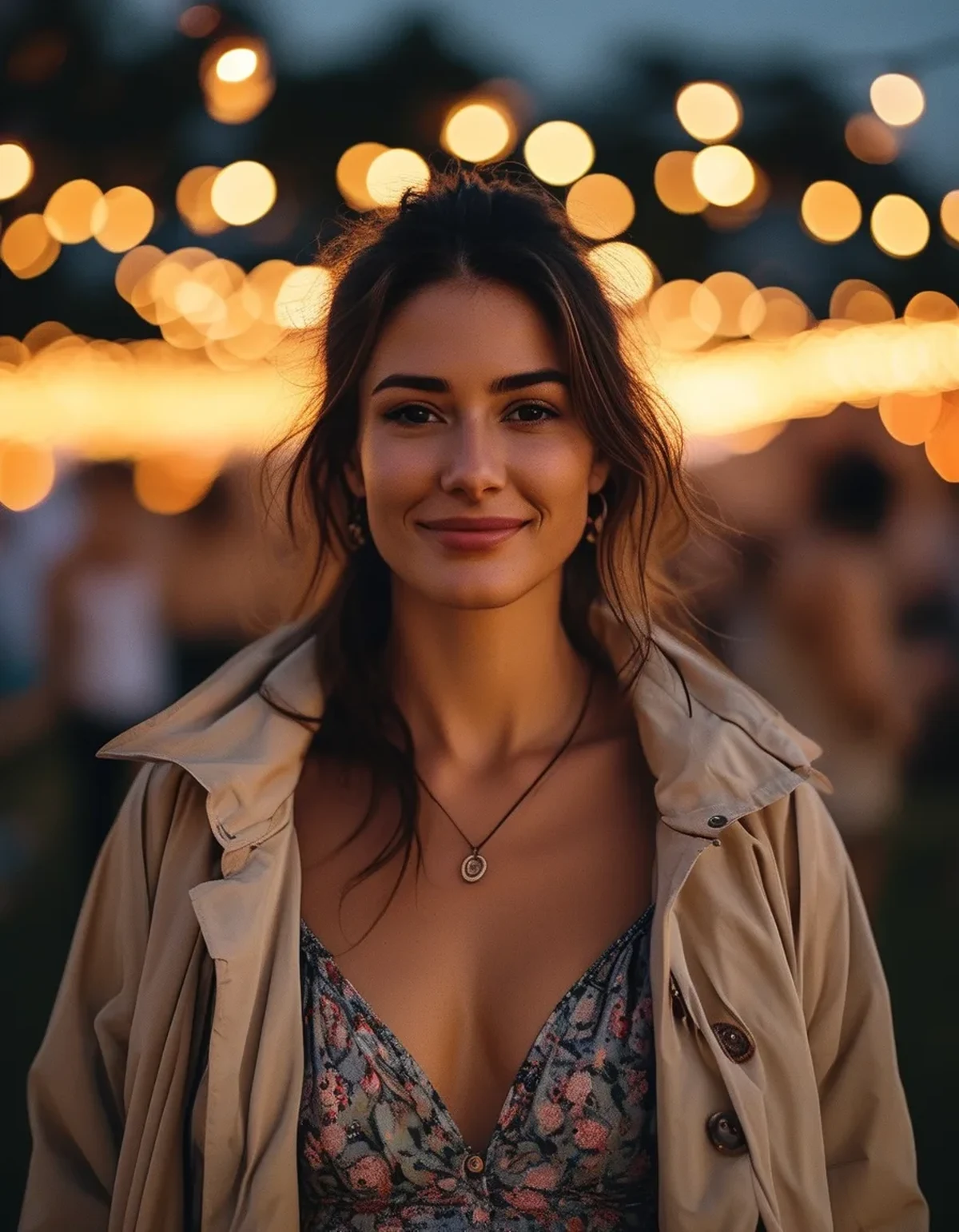
Part 1 - a summer base you are comfortable in at 7pm. A dress, a top and jeans, whatever. This part is easy and it is the part everyone gets right.
Part 2 - one layer that ties around your waist. This is the whole trick. A denim jacket, a light flannel shirt, a packable jacket, or an oversized cardigan. The requirement is that it can live around your waist for three hours without being ruined and without needing a hand.
What fails: anything that must be carried, anything with a hood full of buttons and buckles, and anything you would be upset to see spilled on.
Part 3 - closed shoes with actual support. Trainers or boots. You will be standing on uneven ground for hours, it may be wet, and people will step on you. Sandals fail on all three counts.
The optional but genuinely valuable fourth: a large scarf or a pashmina. Weighs nothing, packs into a small bag, adds real warmth, and doubles as something to sit on. It is the highest-value item you can bring to an outdoor evening show.
And a fifth for anyone who has done this before: a crossbody bag, small, worn across the front. Hands free, secure in a crowd, and it is what most venues’ bag policies permit.
What should you actually bring, and what will get you turned away?
Venue policies have tightened considerably and being turned away at the gate is a genuinely bad way to start an evening.
Check the venue’s bag policy before you leave. Many venues now require clear bags or restrict sizes to something like a small clutch. This is the single most common gate problem and it is completely avoidable with one search.
Worth bringing:
- A portable charger. Phones die faster in cold and with poor signal in crowds, and you need it for tickets and for finding people.
- A screenshot of your ticket. Signal at outdoor venues is frequently unusable when thousands of people are on the same masts.
- Earplugs. Standard, sensible, and increasingly normal. Hearing damage from loud shows is cumulative and permanent.
- A refillable water bottle, if permitted - many venues allow empty ones through.
- A hair tie and a small plaster or two. New shoes plus four hours is a predictable problem.
Frequently prohibited: large bags, umbrellas, professional cameras, outside food and drink, and anything metal-framed. Check rather than assume.
And one logistical note that matters more than the outfit: agree a meeting point with the people you are with before you arrive, because you will not be able to call each other.
What Nobody Tells You About Dressing for Outdoor Shows
You will walk much further than you think. Parking and drop-off points at large outdoor venues are frequently a mile or more from the entrance, on top of standing all evening and walking back in the dark. Shoes chosen for the four minutes people will see you in them is the classic error.
The ground gets wet even without rain. Dew on grass from mid-evening onward soaks fabric shoes and long hems. Anything that drags on the ground will be wet and muddy by the encore.
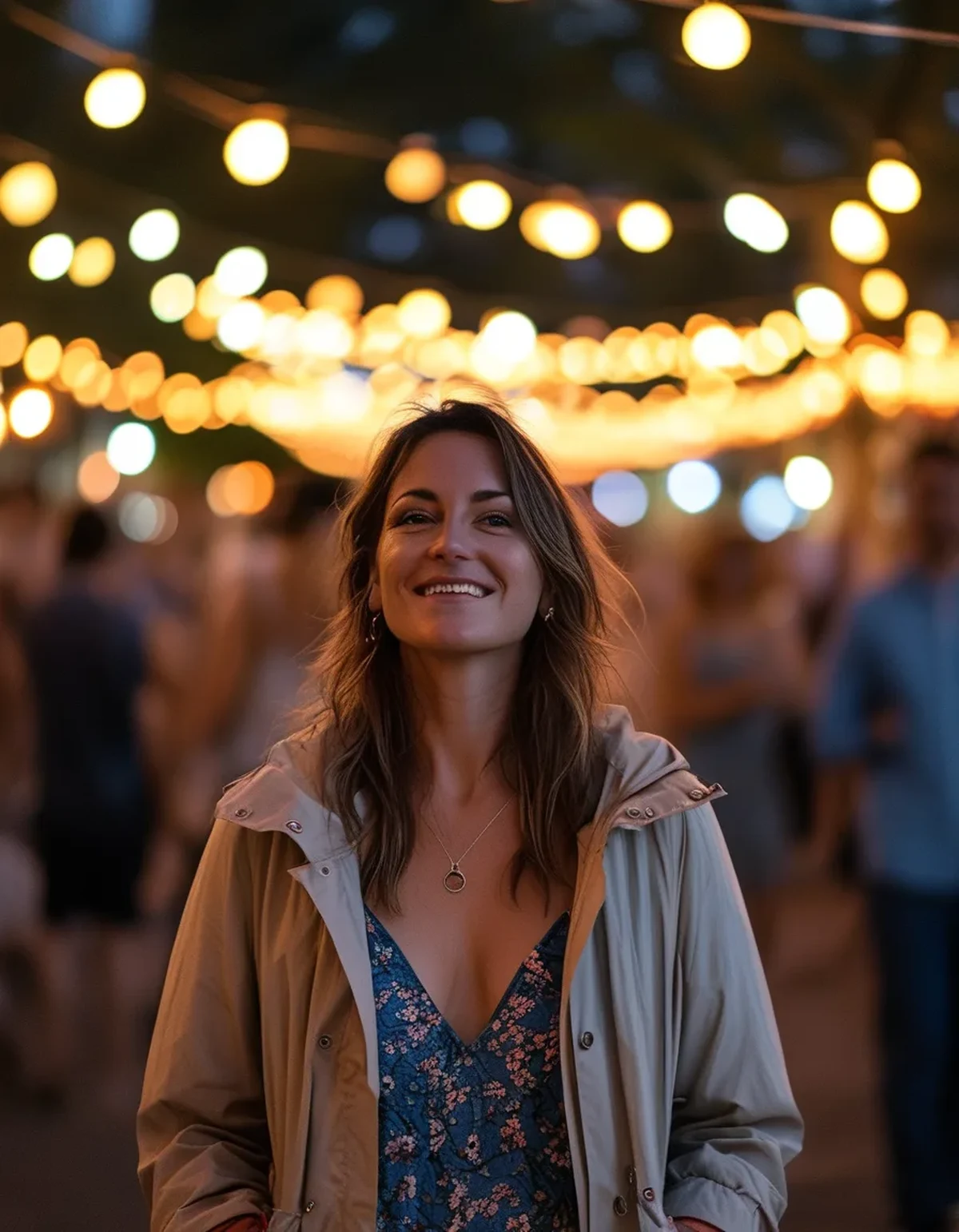
Nobody can see your outfit after dark. The overwhelming majority of the evening is spent in low light in a crowd, which is worth remembering when weighing style against being warm and able to stand. Comfort has an unusually high return at an outdoor show.
Layers you cannot carry become a burden or a loss. Coat check is often unavailable or has enormous queues at the end, which is why the tie-around-the-waist rule matters so much.
Being cold ruins a show more thoroughly than almost anything else. You will remember being cold long after you forget the setlist, and it is the most preventable variable in the entire evening.
And a genuinely practical one: bring layers for the people you are with, if you have room. Someone in your group will be underdressed - it is nearly guaranteed - and a spare scarf makes you extremely popular around 10pm.
What are five outfits that work?
1. Summer dress + denim jacket + trainers + crossbody bag. The default and the easiest. The jacket ties around the waist and the trainers handle the walk and the grass.
2. Jeans + a fitted top + oversized flannel shirt + boots. The most weather-proof combination and the one that handles rain, dew, and a 20-degree drop equally.
3. Shorts or a skirt + fitted long-sleeve + packable light jacket + trainers. For a genuinely hot evening, with the long-sleeve doing the transitional work.
4. Jumpsuit + cardigan or shacket + trainers. One decision, no coordination, and the layer handles the temperature. The practical caveat is the bathroom queue.
5. Leggings or joggers + tank + hoodie tied at the waist + trainers. The maximum-comfort option, which at an outdoor show in the dark is a more rational choice than it sounds.
Across all five: closed shoes, one waist-tieable layer, and a base that works at 7pm. The scarf is the upgrade on any of them.
FAQ: Outdoor Concert Outfit Questions, Answered
How cold does it actually get?
Check the overnight low rather than the daily high, and assume you will feel colder than that because you are standing still. A 15 to 20 degree Fahrenheit drop between doors and the encore is normal in an open venue.
Can I wear sandals or heels?
You can, and you will regret both. Uneven ground, dew-soaked grass, long walks from parking, and other people’s feet all argue for closed shoes with support.
What bag is allowed?
Check the specific venue - many now require clear bags or small clutches. It is the most common reason people get held up at the gate.
Where do I put my jacket during the show?
Around your waist. That is the entire reason the layer needs to be tie-able - coat check is frequently unavailable and always a queue at the end.
Are earplugs really necessary?
Hearing damage from loud music is cumulative and permanent, and modern filtered earplugs preserve sound quality while lowering volume. They are increasingly standard and they cost very little.
TL;DR:
- Plan for the overnight low, not the daily high - open venues drop 15 to 20 degrees after sunset
- One layer that ties around your waist; coat check is usually unavailable or a queue
- Closed shoes with support - you will walk further and stand longer than you planned
- A large scarf is the highest value-to-weight item you can bring
- Check the bag policy and screenshot your ticket before you lose signal
Nobody can see your outfit in the dark. They can see you shivering.
Keep Reading
This article is for general informational and styling purposes only. Fit, sizing, and product availability may vary.